Visitors to the Austrian city of Graz often mention the Italian vibes they experienced in the streets. One reason for this perception is probably the mausoleum of Ferdinand II. The architect of this building was the Italian Giovanni Pietro de Pomis.
You only see what you know (Goethe)

Visitors to the Austrian city of Graz often mention the Italian vibes they experienced in the streets. One reason for this perception is probably the mausoleum of Ferdinand II. The architect of this building was the Italian Giovanni Pietro de Pomis.

An iconic rural element in Slovenia is the Klopotec. It is a sort of bird-scaring rattle. You find it in many traditional Slovenian wine-growing areas. They are also common in some parts of Austria (esp. Styria) and Croatia (esp. Zagorje).

In the streets of Constance (Konstanz), I came across this depiction of a three-headed peacock. Each head wore a tiara. What is the meaning of this strange combination? It is an allusion to the Three Popes Controversy.

The Museum of Military History (Heeresgeschichtliches Museum) organizes a military car festival in Vienna every year. At this event, I took this photo of a Chevrolet Fleetmaster 1946. The US High Commissioner used the depicted car in Austria from 1946–1950.

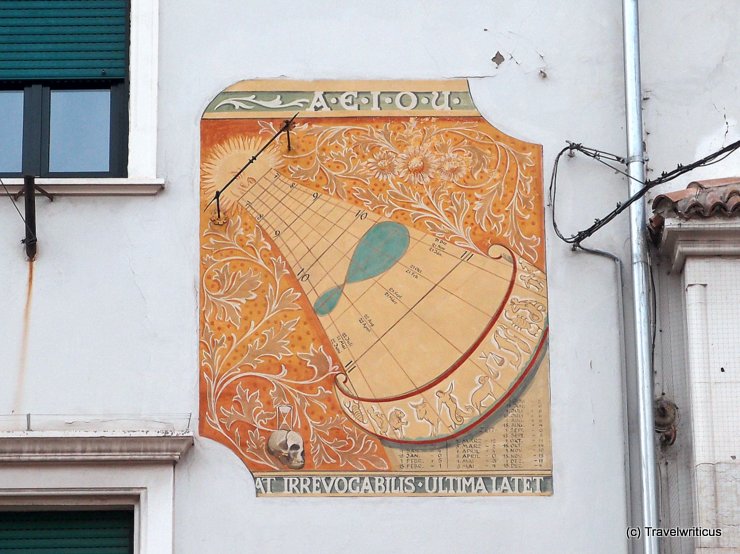
While I walked through Merano in Italy, I came across this sundial. I was impressed by how many elements and codes are compiled in this depiction. For example, you see the motto of Frederick III (A.E.I.O.U.) as well as a skull with an hourglass on top of it. [German]
The Nürnberger Chörlein is an architectural peculiarity in the old town of Nuremberg. These oriels artfully protrude from the upper floor of the houses onto the street and look like elite box seats. [German]

View of Seggau Castle (Schloss Seggau) taken from the nearby Frauenberg Hill. On the walls of the central building, you find an extensive compilation of ancient Roman tombstones.

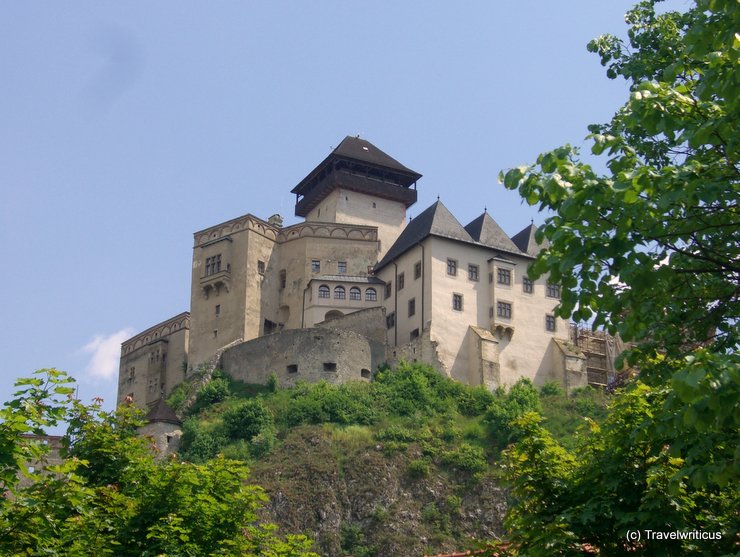
Trenčín Castle (Trenčiansky hrad) is a castle high above Trenčín, a city in the west of Slovakia. For many years, it was the residence of Máté Csák of Trencsén. Today, a castle museum tells about the history of the building and the region.

At first glance, this inn sign in Nuremberg didn’t seem special. But then I discovered the silhouette of a man wearing a crossbow right behind the dull-looking puppet of a witch. Locals told me this symbolizes a honey hunter.

The Zwiebelmusterhaus in Sank Pölten surprised me with its wall decoration of 168 plates. Later I learned the Zwiebelmuster is a pretty famous porcelain tableware pattern for dishware.

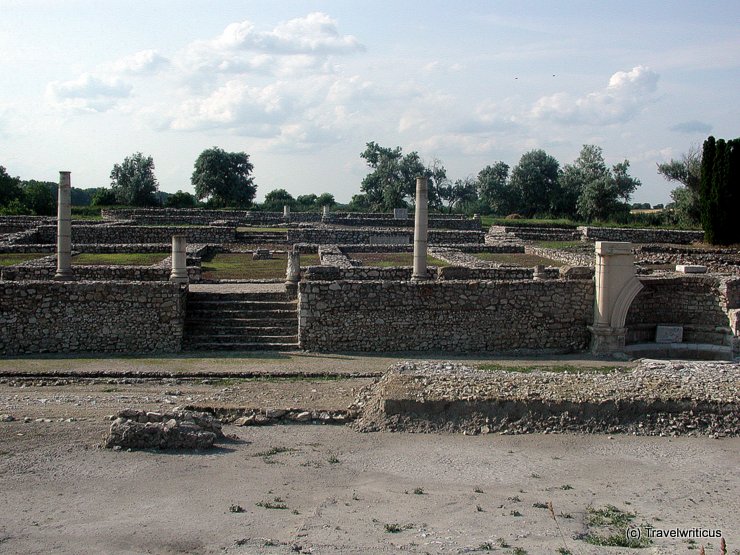
The Gorsium Archaeological Park near Tác tells about life in this region during the ancient age. The Roman influence started here with a fort protecting a road junction and a ford of the Sarviz River in the middle of the 1st century. [German]

At the southern end of Hildesheim’s pedestrian area, I came across a Huckup. The Aufhocker had found its victim in the person of a young thief of apples. But both are just a sculpture created by Carl Röder. [German]