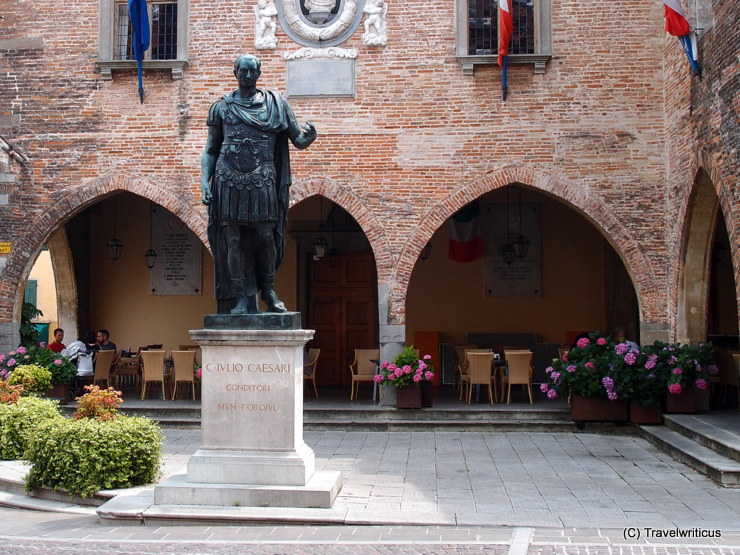
This monument in Cividale del Friuli reminds us of Julius Caesar, who founded the city in 50 BC. Its founding name was Forum Iulli. The name of the area of modern Friuli originates from this ancient city name. [German]
You only see what you know (Goethe)
This monument in Cividale del Friuli reminds us of Julius Caesar, who founded the city in 50 BC. Its founding name was Forum Iulli. The name of the area of modern Friuli originates from this ancient city name. [German]
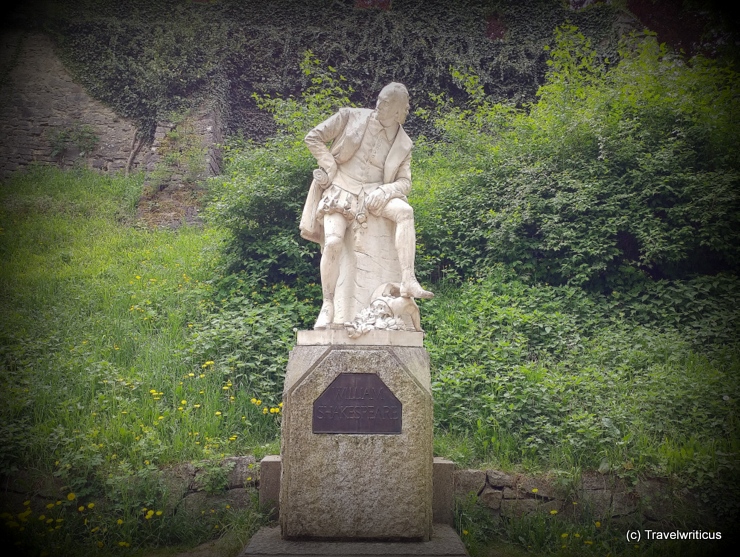
Not far from the artificial ruins in Ilmpark stands a monument to William Shakespeare. The tribute of a British poet in Weimar surprises, but there is a reason. Goethe is considered a main protagonist in the German Shakespeare reception of his time. [German]
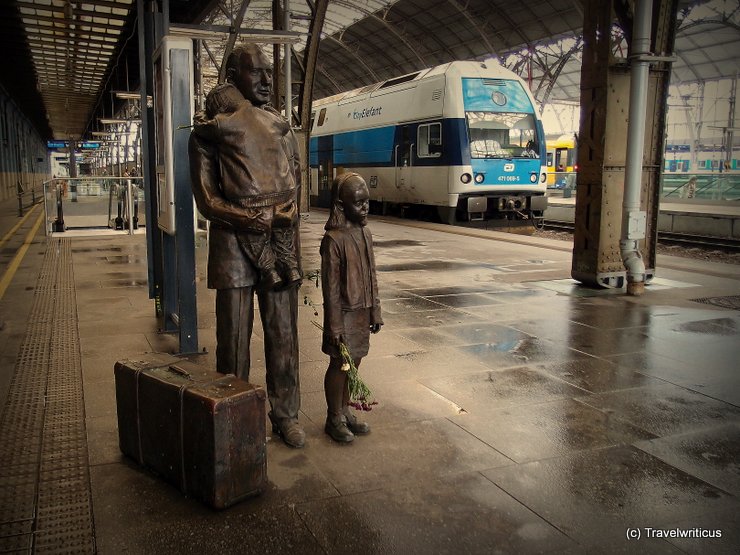
While waiting for my connection train in Prague, my eye fell on a group of bronze statues at platform 1 of Prague Central Station. A man and two children stand next to me. What’s the story behind them? The answer is: Nicholas Winton.
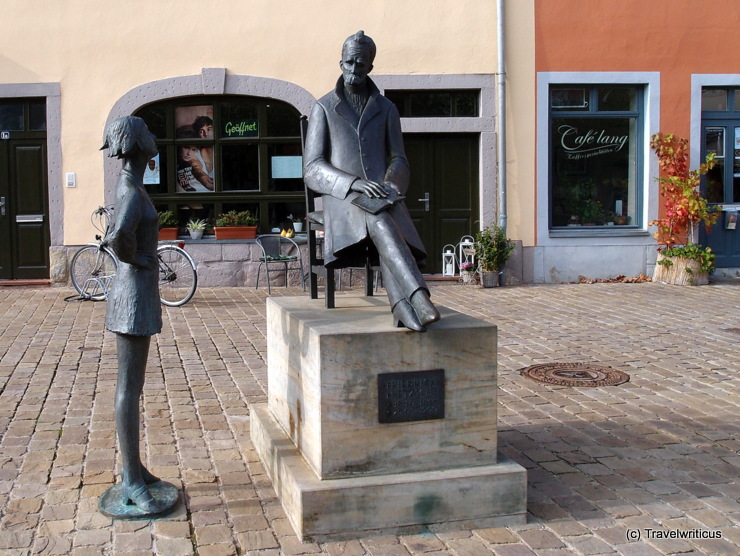
On my urban walk through Naumburg (Saale), a monument with two sculptures attracted me. A young girl stood in front of an old man with a huge moustache. The man obviously represented Friedrich Nietzsche. [German]
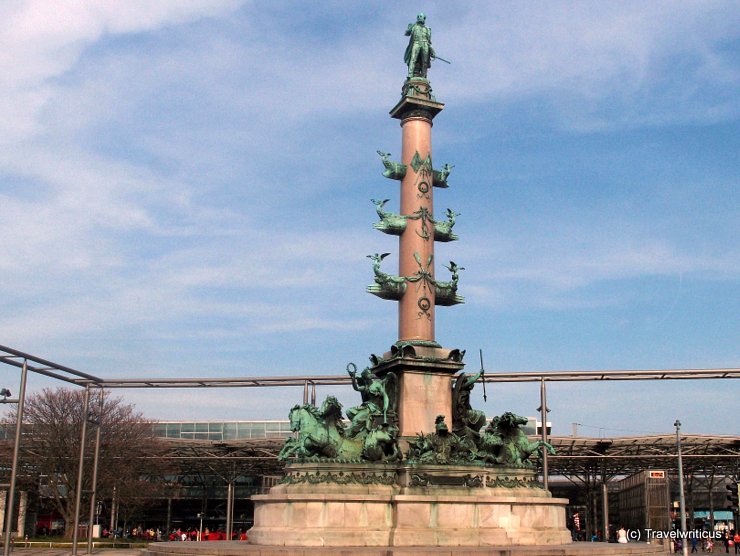
This monument to Wilhelm von Tegetthoff stands next to the Praterstern railway station in Vienna. Wilhelm von Tegetthoff was an Austrian admiral who became famous for the Victory of Lissa (1866). [German]
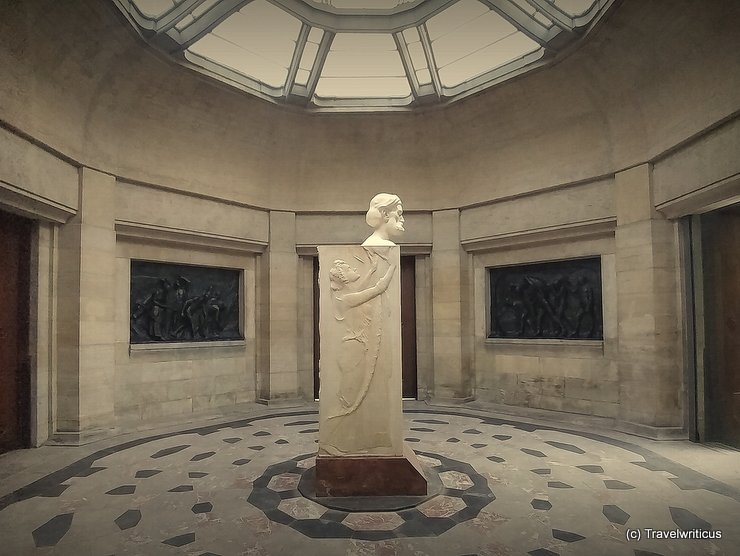
The memorial site to Ernst Abbe reminded me more of a temple than a simple monument. A look through the glass door increased the impression. The dainty image of the industrialist and social reformer Ernst Abbe rested on a massive herm. [German]
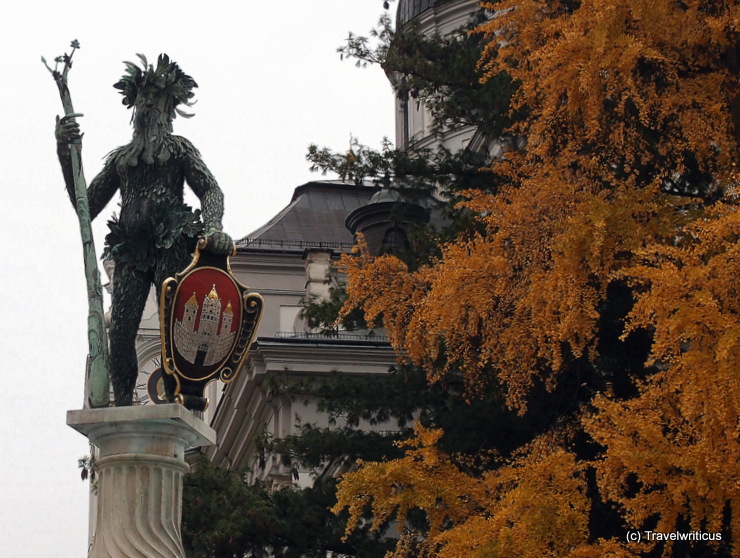
The Wild Man Fountain (Wilder-Mann-Brunnen) has existed since the beginning of the 17th century. Its water basins kept the fish fresh on the fish markets. Today, the fountain stands on the Max Reinhardt Square opposite the Grand Festival Hall. [German]
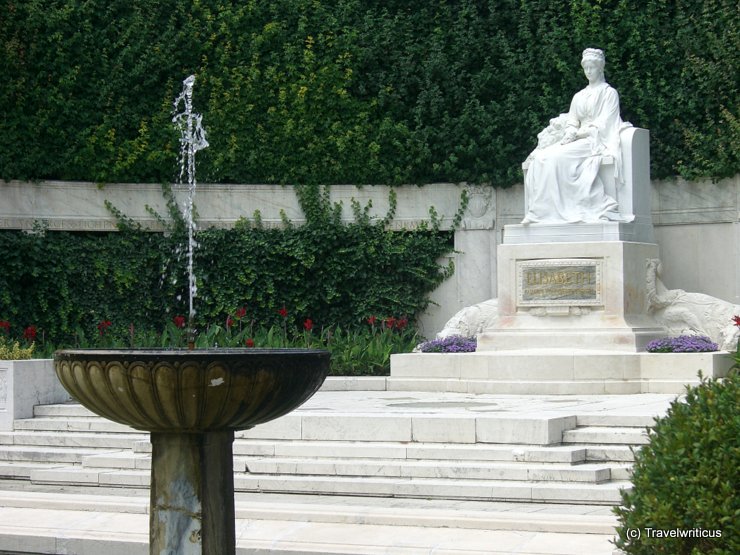
You find this depiction of Empress Elisabeth “Sisi” of Austria at the Volksgarten in the 1st district of Vienna. Friedrich Ohmann created the monument. The statue was a work by Hans Bitterlich.
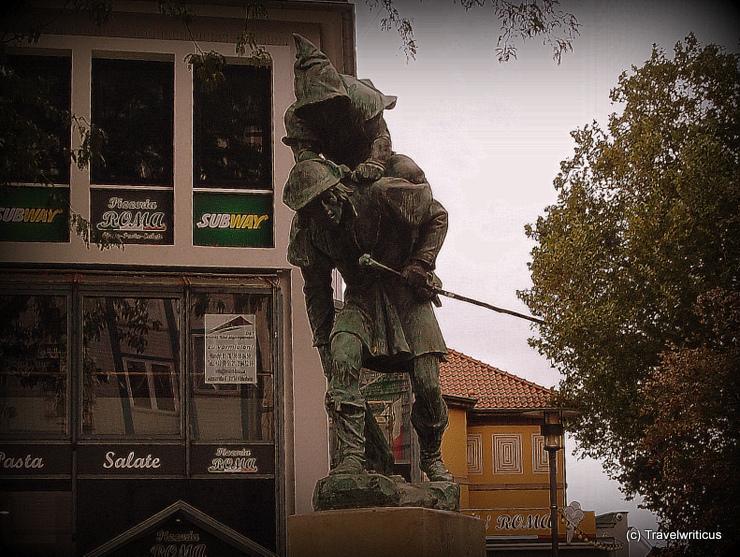
At the southern end of Hildesheim’s pedestrian area, I came across a Huckup. The Aufhocker had found its victim in the person of a young thief of apples. But both are just a sculpture created by Carl Röder. [German]
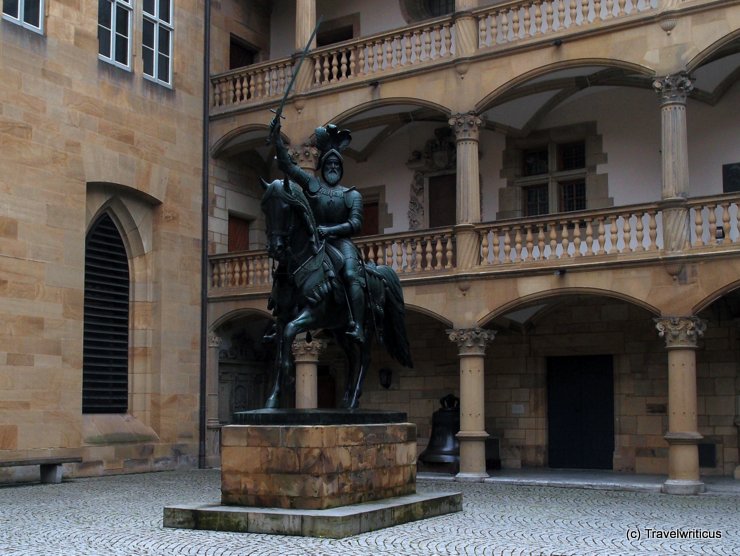
Eberhard I (1445-1496) is considered the first Duke of Württemberg. He is also known as Eberhard im Bart (Eberhard the Bearded). This equestrian statue made of bronze stands in the courtyard of the Altes Schloss (Old Palace) in Stuttgart. [German]
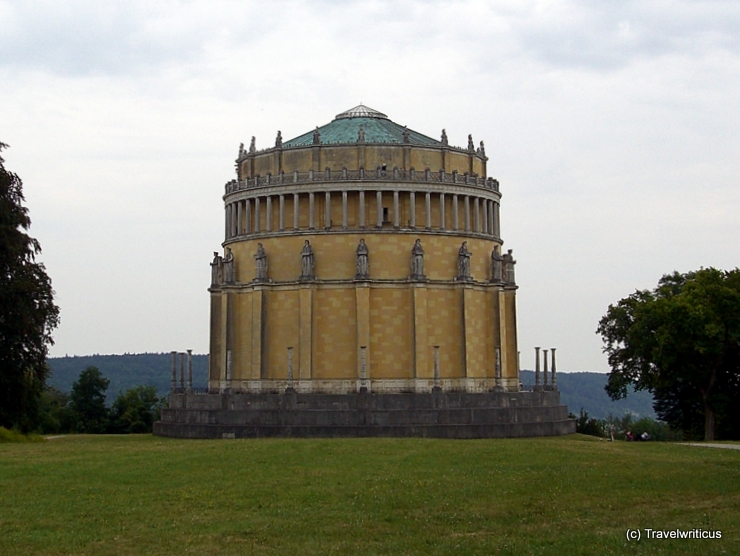
The Hall of Liberation (Befreiungshalle) is a Neoclassical monument on Michelsberg Hill near Kelheim. King Ludwig I of Bavaria commissioned this building to commemorate the victory over Napoleon in the German Campaign of 1813 (Befreiungskriege). [German]
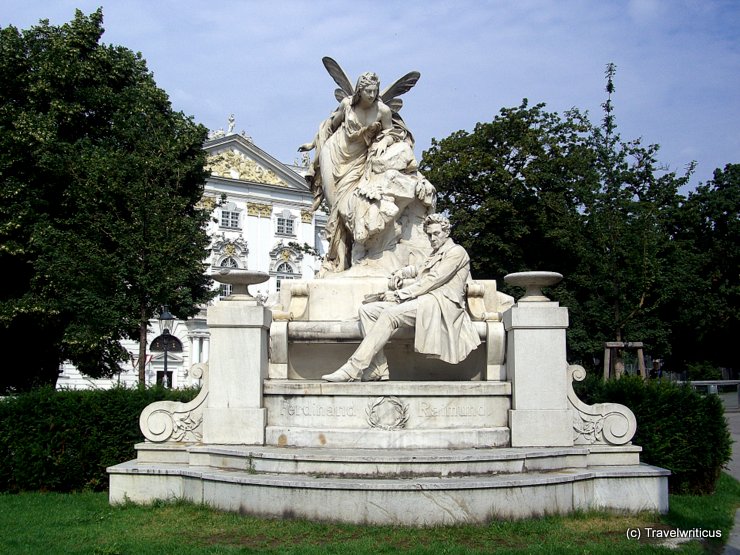
Ferdinand Raimund (1790-1836) was an Austrian actor/dramatist and a master of the Viennese Posse. Watching his plays give insights into the life of the first half of the 19th century in Vienna. [German]