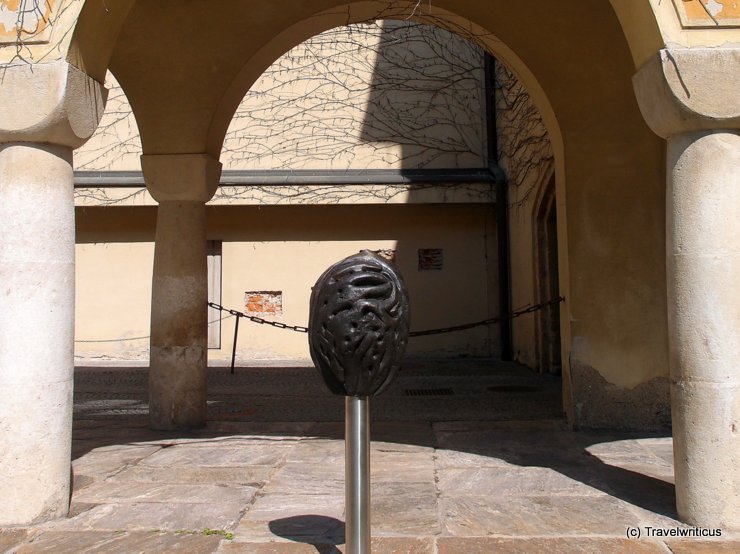
In German, we use the same word for the stone of a fruit and the centre of a city: Kern. So we say Stadtkern to talk about downtown. That’s why this public artwork in the Styrian capital made me smile.
You only see what you know (Goethe)
In German, we use the same word for the stone of a fruit and the centre of a city: Kern. So we say Stadtkern to talk about downtown. That’s why this public artwork in the Styrian capital made me smile.
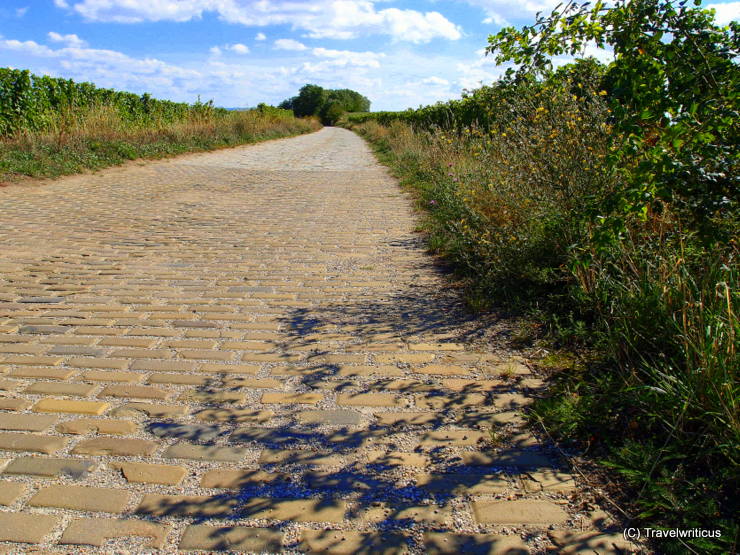
Once upon a time, some parts of Austrian roads were paved with clinker bricks produced in Schattau, the Czech Šatov today. In Poysdorf, you still find a mile with these typically yellow bricks (Schattauer Pflaster).
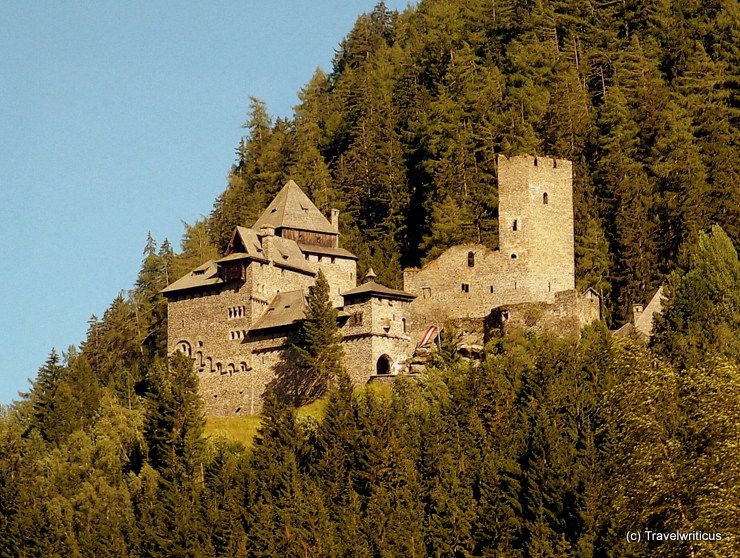
Finstergrün Castle rises high over Ramingstein. This is a place in Lungau, a region in the Austrian state of Salzburg. The first mention of the castle was in the 12th century. Today, it houses a youth hostel. [German]
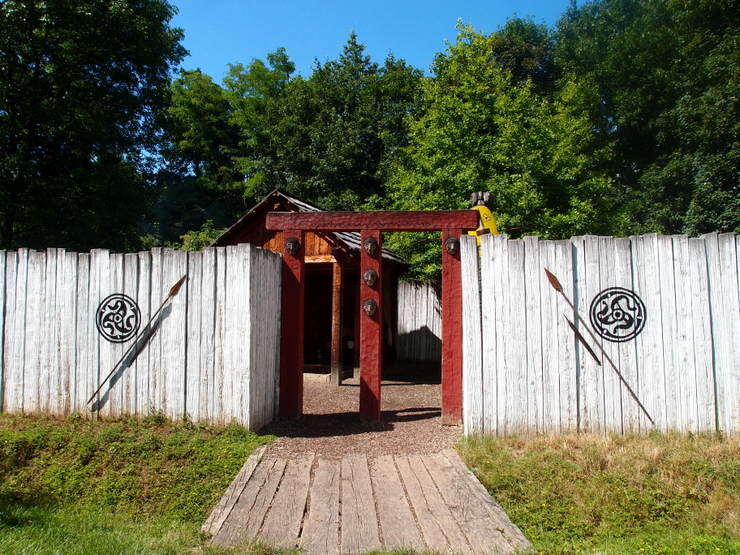
The archaeological open-air site next to Asparn Castle (Schloss Asparn) belongs to the MAMUZ Museum of Prehistory in the Austrian region of Weinviertel. Covering an area of 19,000 m², reconstructed buildings dating from the Palaeolithic Age up to the Iron Age are displayed. [German]
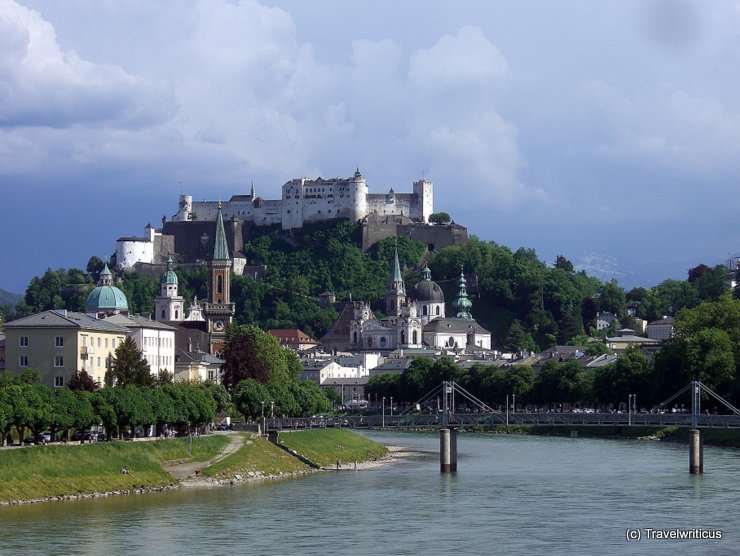
Railway lines between Salzburg and Germany cross the Salzach River near Salzburg Central Station. On my train trips, I always look forward to this #trainwindowview of Hohensalzburg Fortress and Salzburg City while passing the railway bridge.
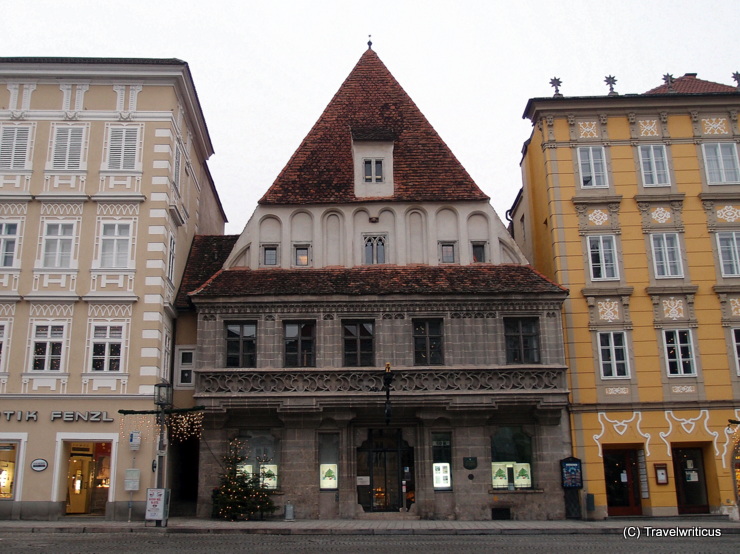
The Bummerlhaus is a late Gothic mansion in the city of Steyr. It is considered one of the finest medieval secular buildings in Austria. Its first mention dates back to 1450, but its oldest part may be from the 13th century.
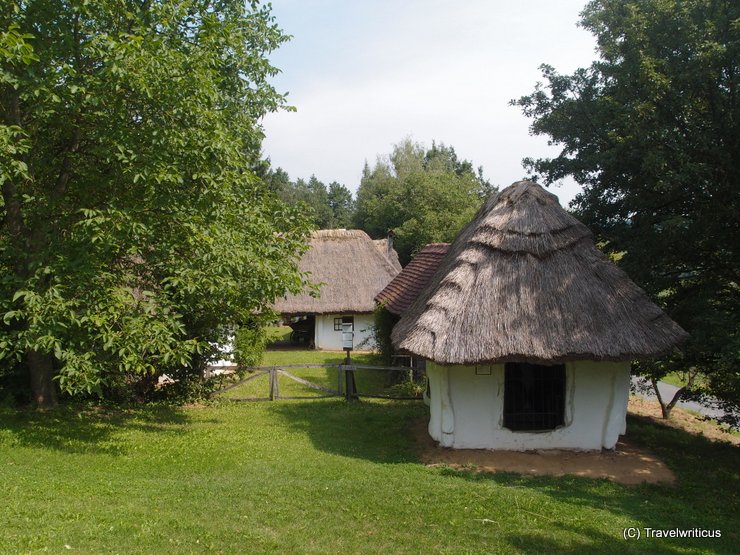
The Austrian state of Burgenland is part of the Pannonian culture sphere. Compared to the Alpine regions of Austria, life is different in this plain area. The open-air museum of Gerersdorf tells you more about the Pannonian farm life of the last three centuries.
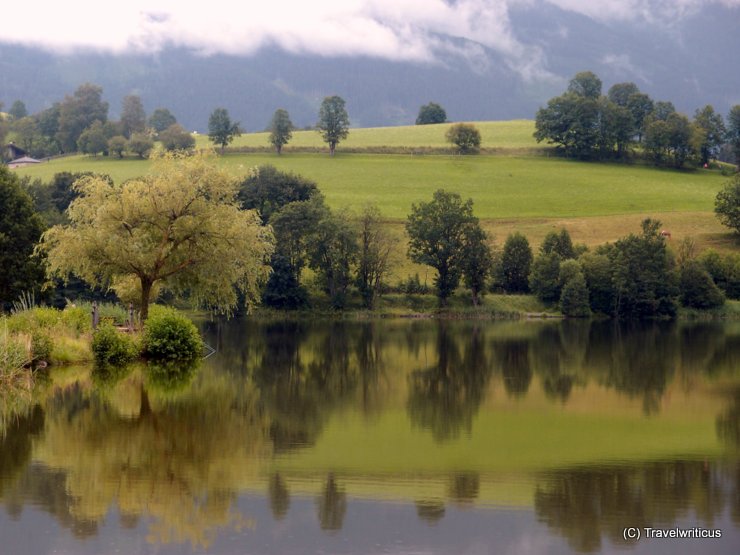
On my way to Ritzen Castle (Schloss Ritzen) in Saalfelden, I came across this lovely lake named Ritzensee. It is an artificial lake built in a former moor landscape. At the castle, I visited the local history museum.
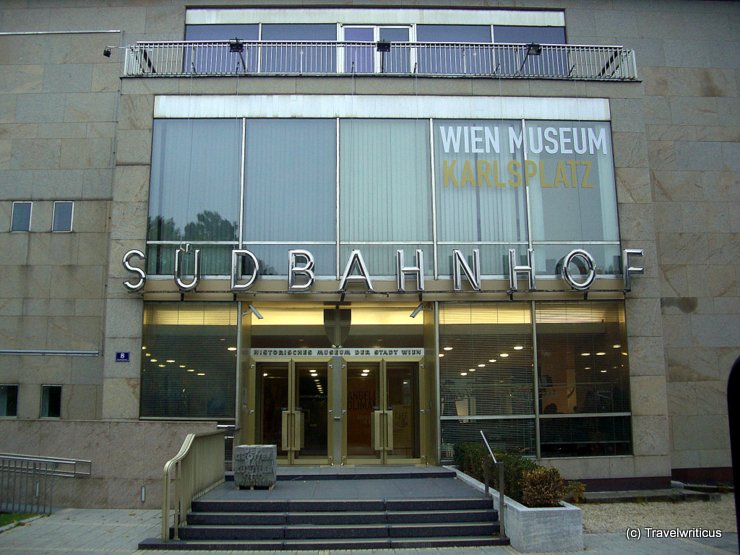
The railway station Südbahnhof closed in 2009 forever. Later, I saw the letters placed above the entrance of the Wien Museum. I wonder how many visitors realised the museum was labelled like a railway station.
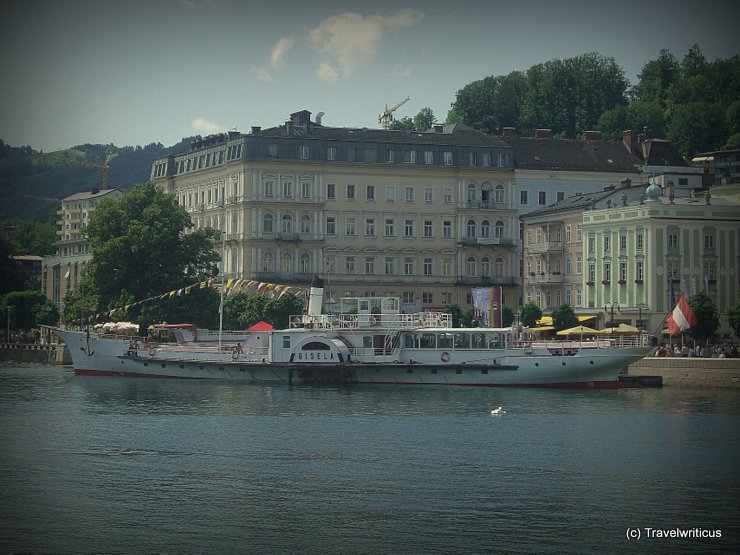
The maiden voyage of the paddle steamer “Gisela” was in 1872. Operated by the Traunsee Schifffahrt, it still runs for cruises, weddings and dinners on Traun Lake (Traunsee). In the photo above, you see the steamer in front of Gmunden. [German]
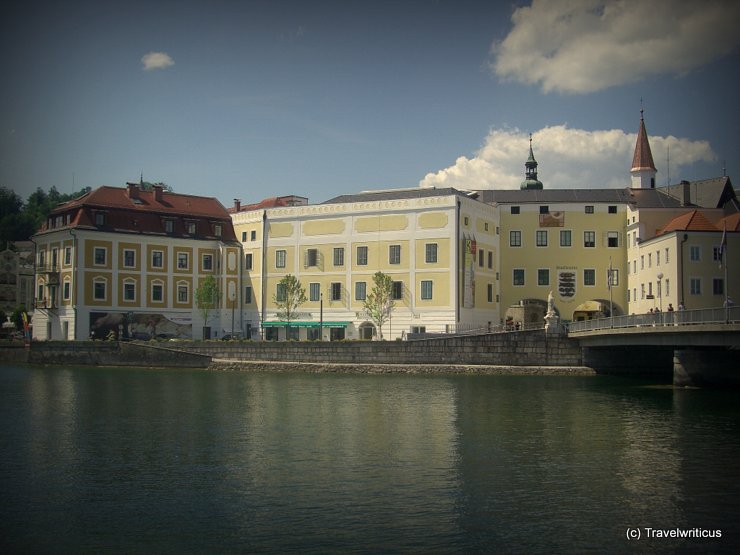
The Kammerhof, dating back to 1450, originally housed an authority for administrating the salt monopoly. Today, the Kammerhof Museum of Gmunden uses the old walls. As a curiosity, you find a compilation of historical toilet bowls inside.
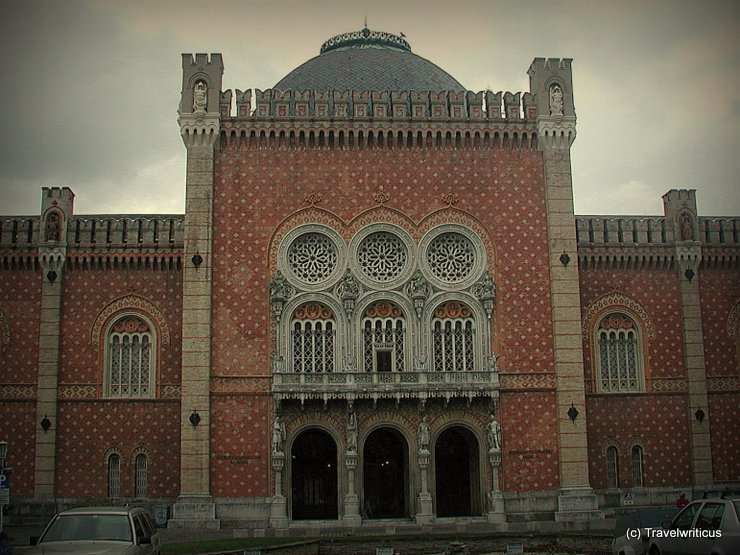
The Museum of Military History (Heeresgeschichtliches Museum) in Vienna is an architectural gem. So you find architecture in the style of Byzantine as well as Neo-Gothic. Some details made me think of being in Venice