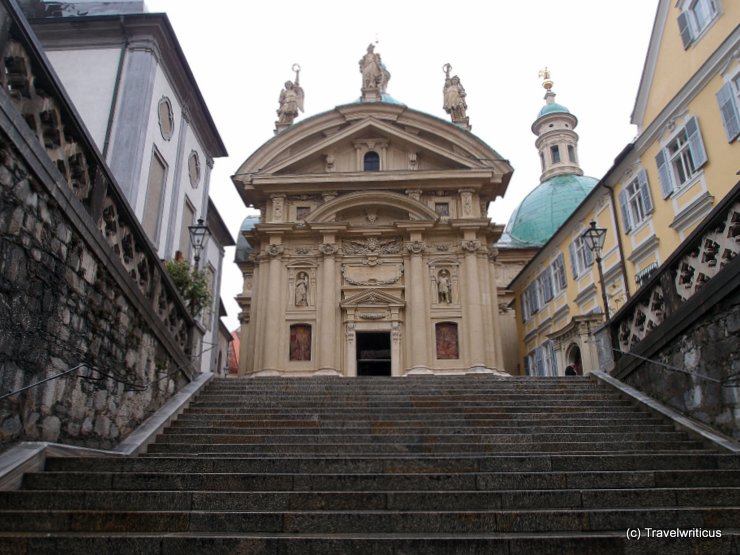
Visitors to the Austrian city of Graz often mention the Italian vibes they experienced in the streets. One reason for this perception is probably the mausoleum of Ferdinand II. The architect of this building was the Italian Giovanni Pietro de Pomis.
You only see what you know (Goethe)
Visitors to the Austrian city of Graz often mention the Italian vibes they experienced in the streets. One reason for this perception is probably the mausoleum of Ferdinand II. The architect of this building was the Italian Giovanni Pietro de Pomis.
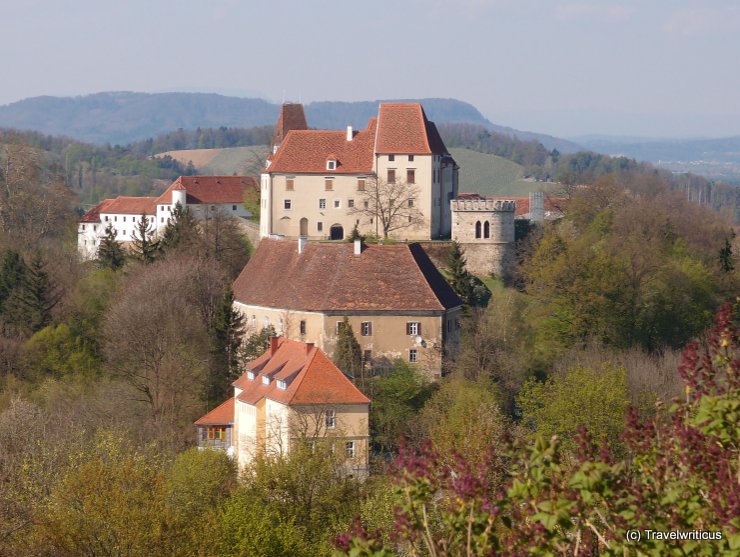
View of Seggau Castle (Schloss Seggau) taken from the nearby Frauenberg Hill. On the walls of the central building, you find an extensive compilation of ancient Roman tombstones.
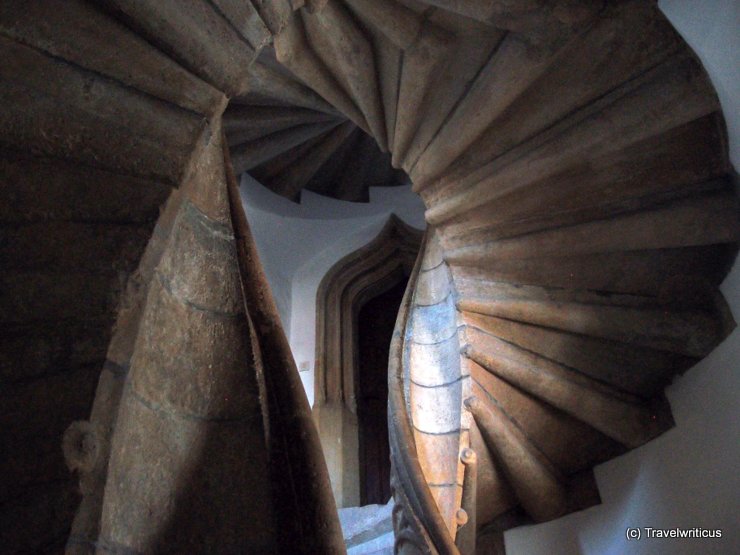
The double spiral staircase of Graz is an architectural element in the former town castle (Grazer Burg). It dates back to around 1500. That way, it is considered the second oldest spiral staircase of its kind.
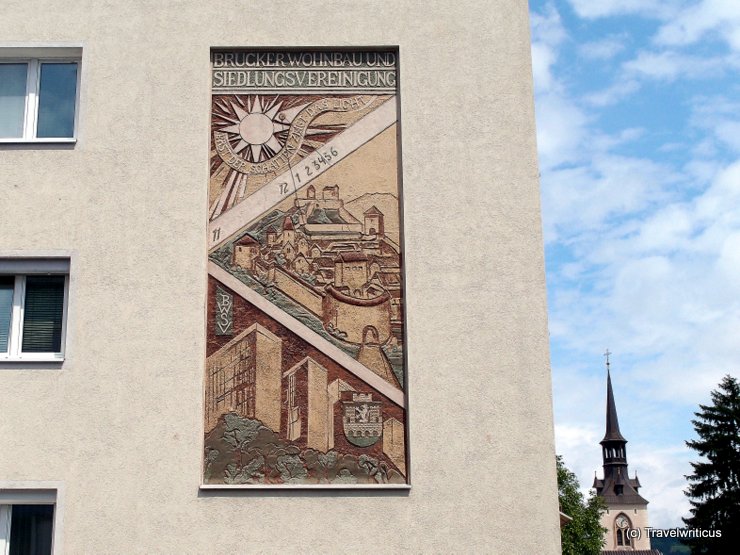
This sundial on a residential building shows two depictions of the Styrian city of Bruck an der Mur. In the upper part of the mural, you see Landskron Castle and the former city walls. [German]
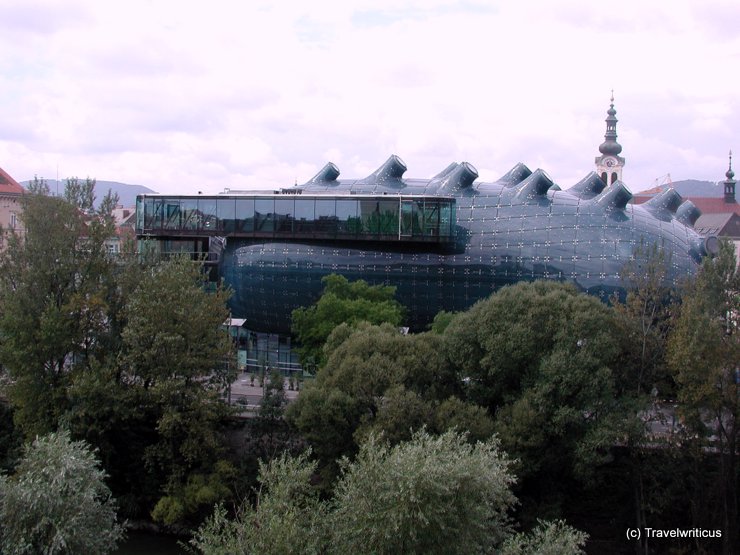
The Kunsthaus, dating back to 2003, shows exhibitions of contemporary art. Because of its architecture, it is generally known as the “Friendly Alien”. The form of an irregular bubble offers the possibility to enjoy bulky sculptures in an appropriate space. [German]
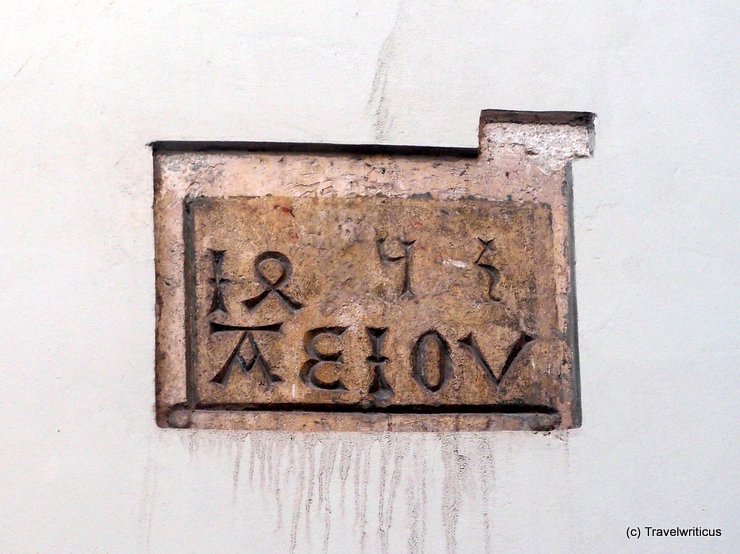
There are a lot of signs in Graz mentioning the string A.E.I.O.U. Habsburg Emperor Frederick III used these vocals to mark his buildings while staying in Graz. The meaning of this string is still unsolved. [German]
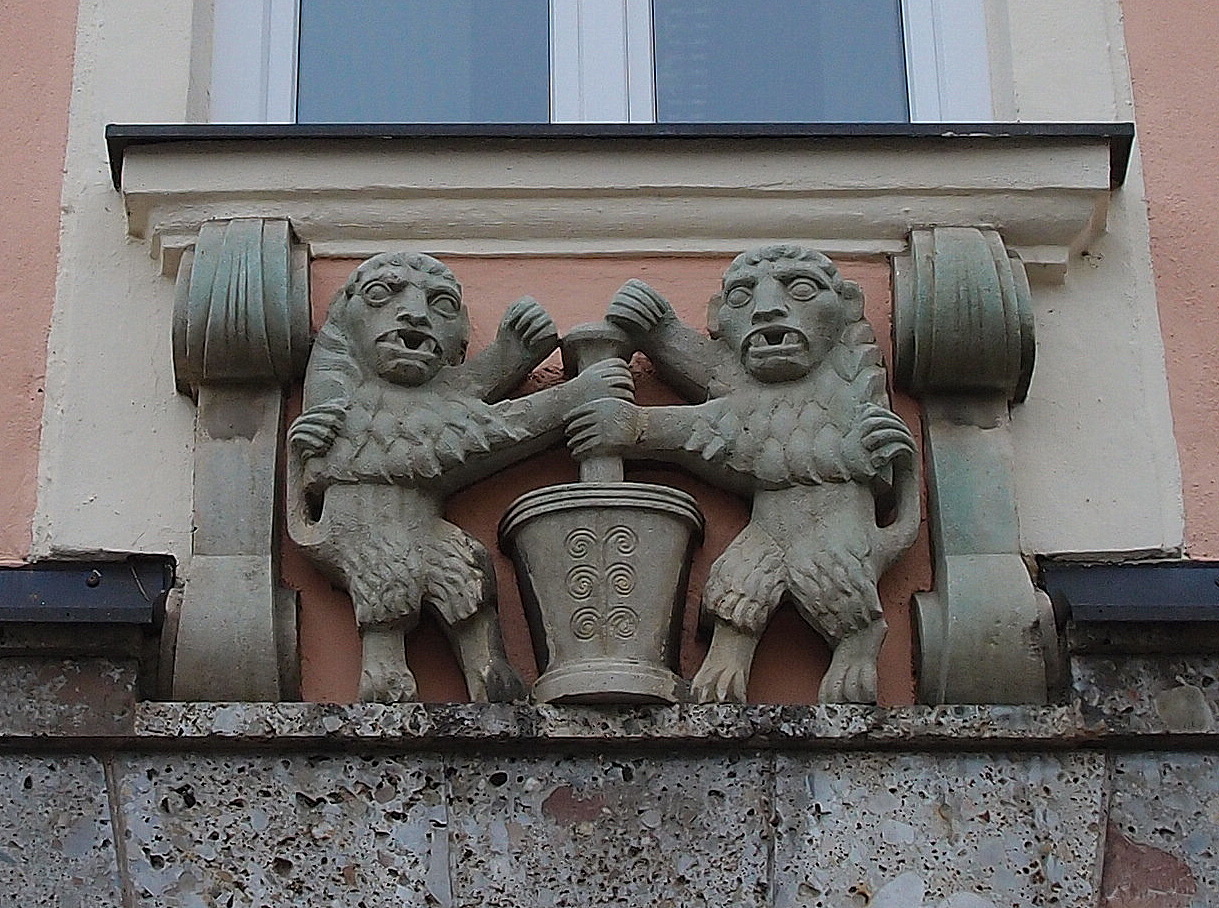
This house sign is located at the former location of the town pharmacy in the building Hauptplatz No. 10. Since 1674, a gingerbread baker has been proved here. A pharmacy started to run in 1841. The house sign dates from the 19th century. [German]
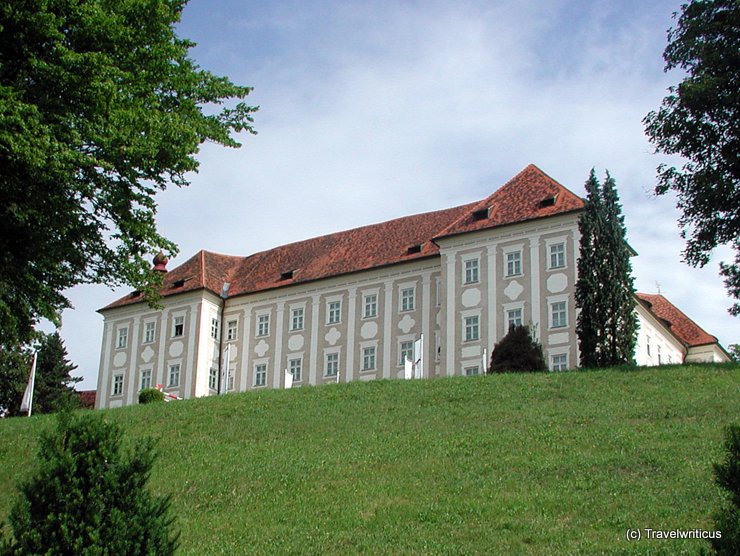
Piber Castle (Schloss Piber) is a palace in the Austrian state of Styria. It stands next to the Federal Stud Piber. The stud breeds the famous Lipizzan stallions performing at the Spanish Riding School in Vienna. [German]
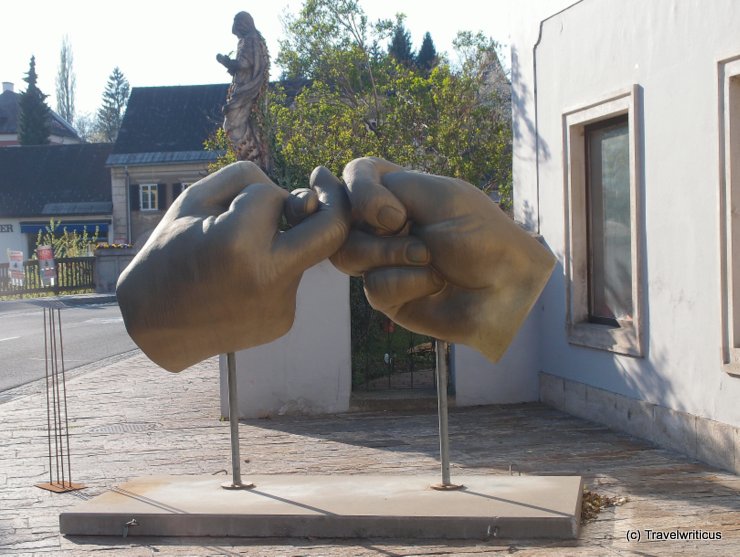
On a sunny spring day in 2012, I came across this sculpture in Ehrenhausen. At first view, it looked like public art portraying something fictitious. But this is wrong. It stands for a real sport with official championships: Finger pulling.
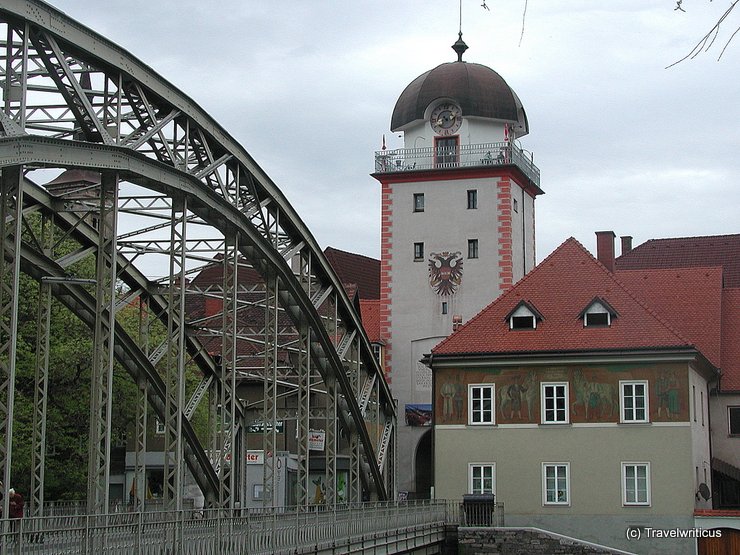
Master builder Peter Carlone built this tower in 1615. In the beginning, the name of this building referred to its function. It was called Mautturm (toll tower). After getting its unique roof in 1794, the name Schwammerlturm (mushroom tower) became common.
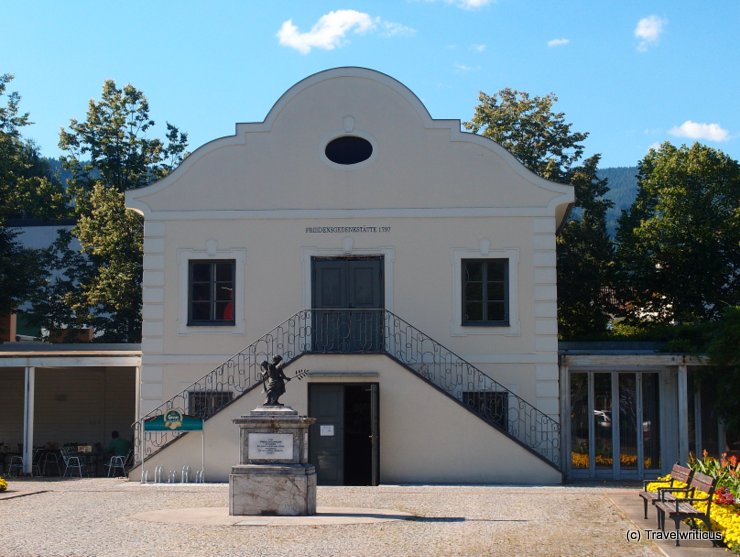
In this summer house formerly owned by Josef von Eggenwald (Eggenwaldsches Gartenhaus), the Peace Treaty of Leoben was signed between the Holy Roman Empire and the First French Republic on April 18th, 1797. This signing was an important event at the end of the “War of the First Coalition”. [German]
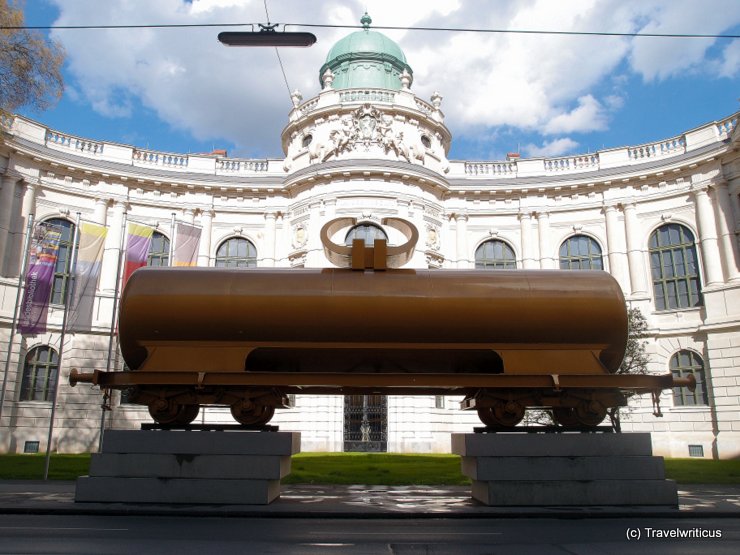
Some years ago, I saw this artwork near the Neue Galerie in Graz. The creator of this piece was Hans Hollein (1934-2014). The striking name of this work with several profound allusions: The Golden Calf (Das goldene Kalb). [German]